World s Best Dad Flower: Embroidery Design Review
First Glance: A Sentimental Graphic That Knows Its Audience
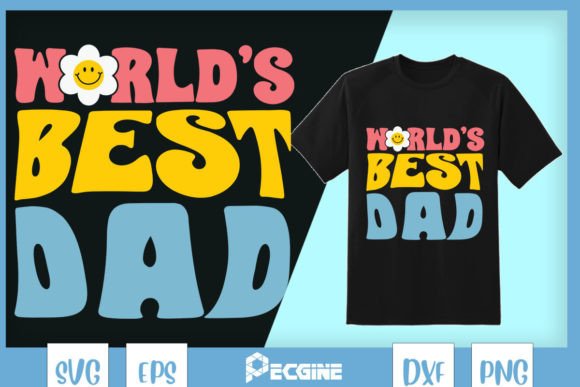
When I first opened the World s Best Dad Flower design files, I immediately pictured a soft, pastel Father’s Day sweatshirt hanging in a boutique window. The composition is unapologetically heartfelt — it pairs floral elements with a loving message, which is exactly the kind of visual that stops a customer mid-scroll on Etsy or at a craft fair. The transparent background across all four file types (SVG, PNG, DXF, EPS) makes it incredibly easy to drop into mockups, embroidery digitizing software, or cutting machine projects without fumbling with stray white boxes. That alone saves a busy maker precious minutes.
From a designer’s eye, the layout feels balanced. The floral shapes are organic enough to soften the bold “World’s Best Dad” statement, but the overall silhouette stays tight enough to read well on a finished product. This isn’t a sprawling, sprawling design — it’s contained, intentional, and deeply giftable. I could already imagine a nine-year-old proudly handing over a tote bag stitched with this, or a new mom ordering a custom onesie for her husband’s first Father’s Day.
Real Project Scenario: The Tote Bag That Almost Wasn’t
Let me walk you through a real-life scenario. Last week, a client asked for a rush order — a personalized canvas tote for her dad’s birthday, featuring something floral but not “too girly.” She wanted the design to feel sturdy, readable from across the room, and completely stitchable in one evening. I pulled up the World s Best Dad Flower PNG preview, overlaid it on a digital mockup of a natural cotton tote, and instantly knew it would work. The pre-sized PNG file gave me a true sense of scale, and the crisp lines in the SVG allowed me to quickly digitize a clean satin-and-fill stitch combination. The transparent background meant I didn’t have to waste any time isolating elements — I just traced and assigned stitches.
What struck me as I tested the stitch simulation was how the floral details would actually read on fabric. The leaves and petals are distinct enough that they wouldn’t turn into blobs at 4 inches wide, but dense enough that I’d need to pay attention to underlay stitching. I did a quick sew-out on a scrap of duck canvas, and the “Dad” lettering caught the light beautifully with a medium gold thread. The flowers, stitched in a muted coral and sage, looked like something you’d find in a high-end gift shop. That’s the kind of immediate reaction that tells me a design asset is worth keeping in the permanent library.
Where This Design Truly Belongs
In my experience, World s Best Dad Flower is a natural fit for a handful of product categories. It’s not a one-size-fits-all solution, but when you place it in the right context, it sings.
- Custom apparel: Sweatshirts and unisex t-shirts are the obvious choice. The message is universal, and the floral motif softens the chest without looking juvenile. A left-chest placement on a heathered grey tee is practically a guaranteed seller.
- Embroidered patches: Because the design has a contained outer shape, it translates perfectly into a patch. The satin stitch border would frame it nicely, and the transparent PNG background already makes it mockup-ready for patch previews.
- Pillow covers and home decor: A linen pillow cover with this design stitched in a subtle tonal thread becomes an instant keepsake. I’ve also seen similar motifs work wonders on kitchen towels or aprons for Father’s Day brunch setups.
- Baby and toddler items: A tiny version on a soft cotton romper or a baby blanket corner adds a tender touch without overpowering the garment. The floral element keeps it sweet, while the text keeps it celebratory.
- Gift tote bags: As I mentioned earlier, canvas totes are a dead ringer. The design’s scale works at around 4 to 5 inches wide, filling the side panel of a standard tote without warping.
In the realm of Graphics and Crafts, this design asset behaves like a versatile bridge between digital planning and physical stitching. It’s not just a pretty picture — it’s a blueprint for a finished product that customers will actually keep.
When to Rethink Your Approach
No design is bulletproof, and a good reviewer knows when to pump the brakes. World s Best Dad Flower has some sensitive spots that can trip up an eager embroiderer.
First, the lettering — particularly the word “Dad” — is the emotional anchor, but it’s also the first thing to lose clarity on textured fabrics. A thick terry cloth towel or a deeply ribbed knit can distort the curves, making the text look wobbly. I’d never run this on a fluffy bathrobe without a heavyweight water-soluble topper. Second, the floral details are charming at a medium scale, but if you shrink the design below 3 inches wide, the smaller petals can start to look crowded. On a baby cap or a narrow wristlet, the stitches might pack too tightly, causing puckering or thread breaks. I’d rather use a simplified version or omit the tiniest leaves for those tiny hoop sizes.
Dark fabrics also demand a careful eye. The transparent PNG might look crisp on screen, but on a black t-shirt, the light floral fills can appear washed out if you don’t bump up the thread density. I always test on both a light and dark scrap before committing to a final sew-out. And stretchy fabrics — like a performance tee — need a firm cutaway stabilizer to prevent the design from distorting after the first wash. The last thing a dad needs is a flower that looks like it’s melting off his shirt.
Stitching Personality Into Every Thread
What I appreciate most about World s Best Dad Flower is the emotional weight it carries without being overly saccharine. The floral shapes are playful but not cartoonish, so the finished product appeals to a wide age range. A teenager buying a gift for her stepdad will connect with it just as much as a grandmother embroidering a pillow for her son. That kind of universal appeal is rare, and it directly translates to higher customer trust and repeat sales for small shops.
From a brand consistency standpoint, this design asset plays well with others. It doesn’t dominate a product line; it complements it. I can easily see a craft business using this as a seasonal hero piece for Father’s Day, then pairing it with coordinating floral monograms or matching “Mom” designs later in the year. The transparent background files make it simple to create cohesive mockup suites, so your product photography looks polished and professional without hiring a graphic designer.
Practical Embroidery Designer Notes
Before you stitch this out for a client or list it in your shop, let’s talk about the practical steps that separate a great product from a returned item.
- Test on scrap fabric first: I always run a full sew-out on the same fabric and stabilizer combo I plan to use for the final piece. The PNG file gives a good visual preview, but actual thread behaves differently on canvas versus jersey.
- Check thread color contrast: The floral elements can get muddy if you choose thread colors that are too similar. I’ve found that a slight value shift — like a dusty rose next to a deeper mauve — makes the petals pop without losing the softness.
- Review stitch density: The SVG’s clean lines help with digitizing, but I still manually adjust stitch density for the fill areas. Too many stitches in the small leaves will perforate lightweight fabric; too few will leave gaps.
- Confirm hoop size: The design’s footprint is flexible, but I prefer to use a hoop that gives at least an inch of clearance around the design. That ensures the needle doesn’t clip the hoop edge and keeps the fabric stable.
- Inspect small details in black and white: I occasionally convert the design to a grayscale preview to see if the “Dad” text still reads clearly. If it gets lost, I know I need to adjust the stitch angle or add a subtle outline.
- Use proper stabilizer: For most apparel, a medium-weight cutaway stabilizer is my go-to. For tote bags, I add a tear-away layer underneath for extra support without adding stiffness.
- Check licensing: The product description clearly states the file formats you receive, but you should always verify whether the included license allows commercial use on finished products. Don’t assume — read the fine print before you sell items featuring this design.
How the File Formats Influence Your Workflow
The fact that World s Best Dad Flower arrives as an SVG, PNG, DXF, and EPS bundle is a quiet power move. The SVG is my starting point for embroidery digitizing — it imports cleanly into most software, and the vector paths are easy to trace. The PNG with its pre-sized formatting is a lifesaver for quick mockups; I can drop it into a product photo template and send a client a realistic preview in under two minutes. The DXF file opens up possibilities for appliqué designs or cutting fabric shapes with a digital cutter, which is a huge bonus for hybrid crafters. And the EPS is there if I ever need to print a paper template or scale the design for large-format projects. The transparent background across all files means I never have to waste time on background removal — a small courtesy that adds up over dozens of projects.
Final Stitch Thoughts
After a full evaluation, World s Best Dad Flower earns a permanent spot in my design library. It’s not just a seasonal graphic; it’s a reliable workhorse for heartfelt gifts, boutique merchandise, and personalized keepsakes. The emotional resonance is immediate, the visual clarity holds up under a needle, and the multi-format delivery makes it a flexible asset for any Crafts business. Whether you’re a seasoned embroiderer or a digital product seller branching into finished goods, this design gives you the raw material to create something that genuinely connects with customers. Give it a thoughtful test sew, pair it with the right fabric, and watch it become a quiet bestseller that Dads actually want to wear.