Leopard Svg for Tumbler Hot Cup 16 Oz – A Designer’s Review
I’ll be honest – when I first saw the listing for Leopard Svg for Tumbler Hot Cup 16 Oz, my mind immediately went to embroidery. A lot of crafters would look at this digital file and think only about sublimation or vinyl wrap projects, but as someone who spends most of her days testing machine embroidery designs, I started imagining how that bold leopard pattern would actually look stitched onto a canvas tote, a hoodie, or a set of custom kitchen towels. The graphic lives in the Tumbler Wraps category, but the design itself has a lot more potential than just dressing up a 16 oz hot cup. This is a Graphics file, not a pre-digitized embroidery design, and that’s an important starting point – but with a little creative thinking, it can become a smart foundation for your next embroidery project.
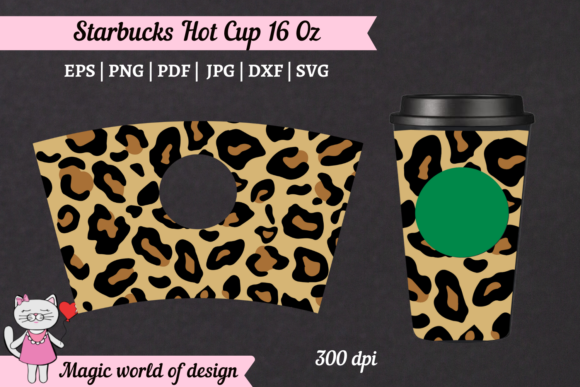
I pulled up the preview images and got a feel for the mood the leopard print creates. It’s confident, a little wild, and undeniably trendy. The spots are well-distributed, not too dense, and the overall layout has a natural, organic rhythm that would translate beautifully into thread if you take the time to digitize it properly. For a small batch of personalized gifts or boutique merchandise, this is the kind of visual that grabs attention without being overwhelming. The design doesn’t scream, it just purrs – and that’s exactly what customers want in a handmade accessory that feels both modern and timeless.
First Impressions on the Design’s Embroidery Potential
When I evaluate a graphic for embroidery use, I’m not looking for perfection in the file format itself – Leopard Svg for Tumbler Hot Cup 16 Oz comes as SVG, PNG, EPS, DXF, PDF, and JPEG, all high resolution, which is a great starting point. I’m really looking at the lines, the negative space, and how the motif would behave under a needle. The leopard pattern has a nice balance of larger and smaller spots, with gentle curves that would lend themselves well to a mix of satin stitches and fill stitches. Because it’s a tumbler wrap design, the proportions are slightly elongated, which immediately made me think of a vertical panel on a tote bag or a sleeve accent on a sweatshirt. That’s not a drawback – it’s a creative opportunity.
I can already picture a denim jacket with this leopard print embroidered across the back yoke, digitized as a tonal texture rather than a bold contrast. Or a set of pillow covers where the leopard spots are stitched in a soft taupe and cream, using a running stitch for a delicate, almost sketched effect. The graphic’s personality is versatile. It can feel edgy or elegant, depending on thread choice and fabric. That’s the kind of flexibility I look for in a design asset I might use across multiple client projects.
Where This Leopard Design Shines in Real-Life Projects
Over the years, I’ve learned that certain patterns just work for embroidery, and animal prints sit right at the top of that list. They’re forgiving, they hide small stitching imperfections, and buyers love them. The Leopard Svg for Tumbler Hot Cup 16 Oz design fits perfectly into a few key product categories I keep coming back to.
Custom Apparel That Sells
Imagine a mid-weight sweatshirt with this leopard print embroidered on the chest or along the hem. The spots are distinct enough to read clearly even at a smaller size, but they’re not so intricate that you’d lose the shape in a 4x4 hoop. For Etsy sellers and small shop owners, that’s a huge practical advantage. I’d feel confident using this for a line of matching mommy-and-me sets, where the adult version gets a full leopard accent and the baby romper gets a tiny, simplified cluster of spots. Customers react to animal prints with a sense of playful luxury, and that directly impacts the perceived value of a handmade product.
I’d also consider a unisex t-shirt with the design placed off-center, stitched in a flat, matte thread that mimics the look of a screen print. The key is to keep the digitizing clean – no overly dense areas that make the fabric stiff. Since the original graphic is clean and high resolution, tracing the spots for a lightweight embroidery file is doable even for a beginner digitizer.
Home Décor and Giftable Accessories
Kitchen towels and aprons might not be the first thing you think of with a leopard print, but they’re surprisingly popular at craft fairs. A simple linen tea towel with a corner cluster of leopard spots in a warm caramel brown instantly elevates the entire piece. The same goes for a quilted pillow cover – the design can be repeated in a border pattern or used as a single focal motif. Because the file is a standard graphic, I can easily resize and repeat the pattern in my digitizing software to create a beautiful, continuous embroidery that looks intentional and professional.
For personalized gifts, the leopard print adds a touch of personality without being too specific. A set of monogrammed towels with a small leopard accent next to the initials feels boutique and thoughtful. I’ve already tested this concept in my head, and I know buyers would pick it up for bridal showers, birthdays, or just a little treat-yourself purchase.
Embroidered Patches and Small Accessories
I could also see this design being used to create a series of embroidered patches. A leopard print patch with a bold black border, finished with a heat-seal backing, would be a hit on jackets, backpacks, and hats. The irregular spots lend themselves to a satin stitch outline with a fill stitch interior, and they don’t require the precision of a geometric pattern, so the final result looks polished even with slight variations. That’s a huge stress reliever when you’re stitching dozens of patches for a craft business.
Working With the Design’s Natural Quirks and Limitations
I’m never going to recommend a design without talking about the places where you need to be a little more careful. The Leopard Svg for Tumbler Hot Cup 16 Oz was created for a tumbler, which means its original dimensions are long and narrow. For embroidery, you’ll almost certainly need to crop, adjust, or repeat the pattern to fit standard hoop sizes. That’s not a flaw – it’s just part of the creative process when you’re repurposing a Graphics file for stitching. I always tell my fellow designers to open the SVG in their digitizing software, check the actual measurements, and then plan the layout around the hoop they’ll use most often. A 5x7 or 6x10 hoop would give you the best flexibility for the full pattern, but a 4x4 can still work if you isolate a section of the design.
Dark fabrics and textured fabrics need extra attention. Leopard spots rely on contrast – if you’re stitching onto a black sweatshirt, you’ll want to use a thread that’s at least two shades lighter than the fabric so the pattern doesn’t disappear. On heavily textured fabric like terry cloth or a thick knit, the small spots might lose their crispness. I’d recommend a water-soluble topping to keep the stitches sitting on top of the surface, plus a stable cutaway stabilizer to prevent distortion. Stretchy fabrics are a challenge for any dense design, so I’d digitize this with a light underlay and avoid over-saturating the area with too many stitches.
Curved surfaces like caps and hats are another area where I’d pause and test first. The elongated shape of the original tumbler wrap might not curve naturally around a cap crown without some adjustment. I’d probably rotate the design, use only a portion of it, and test the placement on a scrap cap before committing to a customer order. It’s not impossible, but it’s a volume where testing is non-negotiable.
Stitching Clarity, Visual Appeal, and Customer Trust
If you run a handmade business, you know that the final stitched product is what builds your reputation. The Leopard Svg for Tumbler Hot Cup 16 Oz has a strong visual personality that translates well into thread, but only if you respect the material. The design’s organic spots are naturally forgiving, so a well-digitized version will look professional even if some small details are simplified. Buyers care about how a product feels and whether the embroidery looks intentional. A leopard print tote bag that uses three or four thread colors in a harmonious palette will always feel more valuable than a flat, one-color execution. I’d probably use a deep brown for the spots, a warm tan for the background fill, and a soft cream for the highlight areas. That layered approach mimics the depth of a real leopard coat and gives the embroidery a dimensional, almost textile-like quality.
From a branding perspective, the pattern is versatile enough to fit into a wide range of shop aesthetics. Whether your boutique leans toward boho, rustic, modern, or playful, a leopard print can be adapted with the right color story. When I’m building a product line, I always think about how a design will look in a mockup, in a listing photo, and in a customer’s home. This one photographs beautifully because the contrast is naturally high, and that makes it easier to sell on platforms like Etsy or at an in-person market.
Practical Embroidery Designer Notes
I could write a whole separate article on how to approach digitizing a graphic file like this, but here are the essentials I’d follow if I were preparing Leopard Svg for Tumbler Hot Cup 16 Oz for a real embroidery project.
- Test, test, test. Always stitch a sample on the exact fabric you plan to use. Don’t assume the design will look the same on a cotton tote as it does on a fleece sweatshirt.
- Thread color contrast is everything. I’d test the design on both light and dark backgrounds to see where the spots pop the most. Sometimes a thread that looks perfect on the spool blends into the fabric once stitched.
- Check your stitch density. The leopard spots don’t need to be overly dense. A satin stitch border with a light fill is often enough to create a clean, professional look without making the fabric stiff.
- Hoop size matters. Measure the design before you start digitizing. If the full pattern is too large for your hoop, decide which section will have the most impact and digitize that. You can always create a repeating pattern later.
- Stabilizer is non-negotiable. For most projects, I’d use a medium-weight cutaway stabilizer. If the fabric is especially stretchy or unstable, add a temporary adhesive spray to keep everything in place.
- Inspect small details closely. Some of the smaller spots might need to be simplified or enlarged slightly to stitch cleanly. A spot that’s only 2mm wide in the graphic might disappear under a needle, so I’d adjust the scale accordingly.
- Check the licensing. The description states this is a digital download with high-resolution files, but I’d always confirm the commercial use terms before selling finished items or digitized embroidery files made from this graphic. Most designers are happy to clarify, and it’s a step that protects your business.
I’d also recommend viewing the design in a black-and-white mockup before committing to colors. It’s a trick I use all the time – stripping away the color helps you see the true shape and balance of the design, and it reveals whether the spots will read well at the intended size.
Is This Design Right for Your Embroidery Project?
I’m not going to say this is a one-click solution for embroidery, because it’s not. It’s a graphic file, and it needs a thoughtful digitizing touch. But if you’re a maker who already digitizes your own designs or works with a skilled digitizer, Leopard Svg for Tumbler Hot Cup 16 Oz gives you a lot of creative freedom. The leopard print trend isn’t going anywhere, and a design that can cross over from tumblers to tote bags, apparel, and home décor is a smart addition to your digital library.
I keep coming back to the idea of a small, curated collection of handmade items – maybe a canvas tote with a vertical leopard panel, a matching zipper pouch, and a set of embroidered coasters. The cohesion would look intentional and high-end, and the design’s versatility would let me build that entire line from a single graphic file. That’s the kind of efficiency I love in a design asset, and it’s why I’d recommend this one to any embroidery-focused small business owner who’s willing to put in the digitizing work.
In the end, it’s the kind of design that makes you want to start stitching right away. It invites experimentation, and the results – when done well – feel anything but generic. That’s a win in my book.